Centrelink JobSeeker Payment: Eligibility, Rates & How to Apply (September 2026)
JobSeeker Payment is Australia's main income support payment for people who are looking for work or unable to work due to illness or injury. If you're a new migrant who has served the NARWP waiting period, or an Australian citizen who's lost their job, this guide covers key eligibility rules, payment rates, mutual obligations, and how to apply. Services Australia assesses each claim.
In this guide
What Is JobSeeker Payment?
JobSeeker Payment (formerly known as Newstart Allowance) is an income support payment administered by Services Australia (Centrelink). It provides fortnightly payments to eligible Australians who are:
- Unemployed and looking for work
- Temporarily unable to work due to illness, injury, or disability
- Working part-time and earning below the income threshold
JobSeeker is paid fortnightly (every 2 weeks) directly into your bank account. The amount you receive depends on your personal circumstances - whether you're single or partnered, your age, whether you have dependent children, and any income or assets you have.
Eligibility Requirements
You must meet the age, residence and means-test rules, plus an eligible employment or temporary medical situation. See Services Australia's eligibility rules.
Age
- Be between 22 years old and Age Pension age (currently 67)
- If you're 16-21 and looking for work, check Youth Allowance for job seekers instead
Residency
- Normally, you must be living in and physically present in Australia when claiming, and be an Australian resident for social security purposes
- This generally means an Australian citizen, permanent visa holder or protected New Zealand Special Category visa holder living in Australia
- Some non-protected SCV holders may qualify for a one-off period of up to 6 months after 10 continuous years living in Australia immediately before claiming
- Serve any applicable NARWP, unless an exemption applies
Check the residence rules, residence definitions and New Zealand citizen rules. Holding subclass 444 alone does not establish eligibility.
Employment or Medical Situation
You may qualify while unemployed and seeking work, or when working reduced, part-time or casual hours. You may also qualify if illness or injury temporarily prevents your usual work or study; medical evidence is required. These are alternative situations, not conditions you must all meet.
Income & Assets
- You must satisfy the applicable income and assets tests (detailed below)
- Your partner's income and assets are also assessed if you have a partner
Current Payment Rates (September 2026)
The Services Australia rate table gives these maximum fortnightly amounts from 20 September 2026. Rates are reviewed each 20 March and 20 September. Actual payment depends on your circumstances and means tests; weekly figures below are the fortnightly amount divided by two.
| Situation | Maximum Fortnightly Rate | Approx. Per Week |
|---|---|---|
| Single, no children | $824.90 | $412.45 |
| Single, with dependent children | $883.30 | $441.65 |
| Single, aged 55+ after 9 continuous months receiving income support | $883.30 | $441.65 |
| Single, assessed work capacity below 15 hours per week | $883.30 | $441.65 |
| Partnered (each) | $755.10 | $377.55 |
| Single principal carer with an approved exemption for foster care, court-ordered non-parent relative care, home schooling, distance education or a large family | $1,068.20 | $534.10 |
Use the official rate and Payment Finder guidance to check an estimate. Our Centrelink Calculator is a general planning tool; check its rate date before relying on a result.
Income & Assets Test

JobSeeker Payment has separate income and assets tests. Income can reduce the payment; exceeding the assets limit can cancel it.
Income Test
For a single person who is not the principal carer of a child under 16:
- The first $150 per fortnight does not reduce payment
- Income between $150 and $256 reduces payment by 50 cents per dollar
- Above $256, the reduction is $53 plus 60 cents per additional dollar
Single principal carers have a different taper: 40 cents per dollar above $150. Partnered claims have separate rules. Working Credits and some supplements can affect the outcome. Check the official income test and cut-offs for your situation.
Working Credit
Working Credit lets you build up credits during periods when you earn no income or low income. These credits can then offset your earnings when you start working, reducing the impact on your payment. You can accumulate up to 1,000 Working Credits.
Assets Test
The assets limits from 1 July 2026 are below. Your principal home is generally excluded, but other assets in Australia and overseas can count.
| Situation | Homeowner | Non-Homeowner |
|---|---|---|
| Single | $333,000 | $600,000 |
| Couple (combined, including where only one partner is eligible) | $499,000 | $766,000 |
Payment is cancelled if assessable assets exceed the applicable limit. There is no $3-per-$1,000 JobSeeker assets taper. Assessable assets can include savings, investments, home contents, vehicles and other property; there is no general $10,000 vehicle exemption.
Mutual Obligations
Your Job Plan sets out the tasks you must do unless an exemption or pause applies. Follow the current mutual obligation rules.
What You Must Do
- Follow your Job Plan, including any required job searches, interviews and activities
- Attend required appointments and accept suitable work
- Report your and your partner's employment income every 2 weeks, including when it is $0
Points Targets
Workforce Australia participants generally have a tailored monthly points target, which may include a job-search minimum. Check your account or provider for your requirements; a universal job count or points-per-hour table will not apply to everyone.
Exemptions and Different Requirements
Medical circumstances, caring responsibilities and other situations can change your requirements. Approved work or volunteering may fully meet requirements for some people, including some older job seekers; this is not an automatic exemption. Ask Services Australia or your provider about your situation.
NARWP & Visa Holders
The Newly Arrived Resident's Waiting Period (NARWP) can affect when a new migrant qualifies for JobSeeker Payment.
How the Waiting Period Works
A 4-year wait generally applies where a relevant visa was granted on or after 1 January 2019. Earlier visas and some visa subclasses have different rules. Only qualifying time physically in Australia counts, so overseas absences can move the end date. Partner-visa history can also affect when the period starts. Check the official NARWP rules.
Our NARWP Countdown tool is an estimate. Ask Services Australia to confirm how your history is counted.
Exemptions from NARWP
Exemptions can apply to Australian citizens, refugees, former refugees and some family members. There are also payment-specific exceptions, including for some people who become single principal carers during their current Australian residence. Family violence is not a blanket JobSeeker exemption. See the exemption rules and ask Services Australia to assess your circumstances.
Alternatives During NARWP
If you're in the NARWP period and need financial help:
- Special Benefit: Has its own eligibility rules and waiting periods. Hardship alone does not guarantee eligibility; ask Services Australia whether you qualify and whether an exemption applies
- Emergency Relief: Charities like the Salvos, Vinnies, and Anglicare provide emergency food, utility assistance, and small grants
- Settlement grants: Some settlement agencies provide one-off financial assistance
For a full explanation of NARWP including all waiting periods, see our NARWP Explained guide.
How to Apply Step by Step
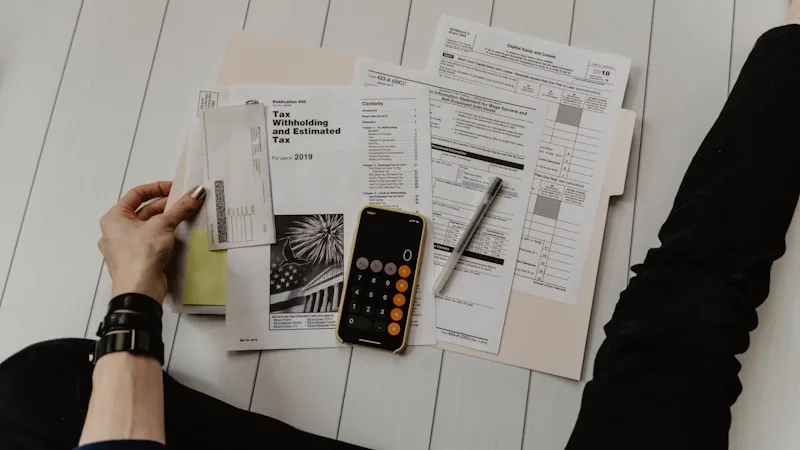
You can generally claim online through myGov. The claim will tell you which documents and appointments you need:
- Create a myGov account at my.gov.au if you don't already have one
- Link Centrelink to your myGov account - you'll need to verify your identity (passport, visa details, or go in person to a Centrelink office)
- Start an online claim - log into myGov, go to Centrelink, and select "Make a Claim" then "JobSeeker Payment"
- Complete the claim form - provide personal details, living situation, income, assets, bank details, and employment history
- Upload documents - you'll need identity documents, bank statements, proof of residency, rental agreement (if claiming Rent Assistance), and any medical certificates
- Book a claim appointment if prompted before submitting, then attend it within the required timeframe
- Submit the claim, keep the receipt and track the estimated completion date in your account
- Complete any initial tasks, including income reporting and a Job Plan. Follow your referral instructions if employment services are required
Want to track your progress?
Create a free SettleAU account to save this checklist and tick off items as you go.
Create free accountAdd-On Payments & Supplements
In addition to the base JobSeeker rate, you may be eligible for these supplements:
Rent Assistance
If you pay eligible rent and receive a qualifying payment, Rent Assistance may apply. The September 2026 rates include a maximum $223.80 per fortnight for a single person without dependent children, or $149.20 for a single sharer without dependent children. Rent thresholds, accommodation and family circumstances matter.
Energy Supplement
For JobSeeker, the Energy Supplement rates include $8.80 per fortnight for a single person with no children and $7.90 for a partnered person. Other categories have different rates; eligibility rules apply.
Pharmaceutical Allowance
Some JobSeeker recipients qualify for Pharmaceutical Allowance, including people with an eligible medical condition or partial work capacity. Check the current rate for your circumstances.
Health Care Card
JobSeeker is a qualifying payment for a Health Care Card. It can help with prescription costs and other concessions. Available discounts and bulk billing depend on the provider and location.
Explore Family and Newborn Payment Scenarios
The linked calculator covers limited family/newborn scenarios; it does not calculate JobSeeker. Use the official JobSeeker rate and income-test guidance above for that payment.
Use Centrelink CalculatorTips for JobSeeker Recipients
1. Report Income Accurately and On Time
Every fortnight, you must report your income through the Centrelink app or myGov by your reporting date. Late or incorrect reporting can result in payment delays or overpayments that you'll need to repay. Set a phone reminder for your reporting day.
2. Keep Records of Your Job Search
Document every job application - the date, position, company, and how you applied. Your employment provider may ask for evidence. Screenshots of applications and confirmation emails are useful proof.
3. Understand the Income Free Area
Check the income rules for your household and any available Working Credits. Your partner's income can also matter. Estimate your total income and work-related costs rather than assuming one threshold applies to everyone.
4. Check Early-Claim Timing
If your waiting period is ending, ask Services Australia when you can start and submit a claim. Starting a saved claim is not the same as submitting it, and payment is only available after assessment and approval.
5. Know Your Appeal Rights
You can request a formal review by an Authorised Review Officer. If you disagree with that decision, you may seek an Administrative Review Tribunal (ART) review. The ART replaced the AAT on 14 October 2024. There is no application fee for a first Centrelink review at the ART; check your decision letter for deadlines and back-payment implications.
Frequently Asked Questions
How long does it take to get JobSeeker Payment after applying?
Timing depends on assessment, initial tasks and any waiting periods. Services Australia generally expects to respond within 21 days of submission; a first payment is usually around 2 weeks after approval, unless a waiting period applies. Check your claim receipt and online account for your estimate.
Can I get JobSeeker while studying?
Full-time students should check student-payment eligibility. Some approved study can fit a Job Plan. Ask Services Australia or your provider before assuming a course meets your JobSeeker requirements.
Study and Job Plan requirements.
What happens if I get a job while on JobSeeker?
Keep reporting income every 2 weeks. The income test and any Working Credits determine how much you receive. If payment falls to zero, keep following your reporting instructions and ask Services Australia what happens if your income falls again.
Reporting and zero-rate periods.
Can I travel overseas on JobSeeker?
Payment normally stops when you leave Australia unless the travel is for an approved reason. Tell Services Australia before leaving, including on an international cruise, and check the rules for your claim.
Can temporary visa holders get JobSeeker?
Most temporary visa holders do not qualify. Protected New Zealand SCV holders can meet the Australian-resident definition; some non-protected SCV holders have a limited, one-off entitlement after 10 continuous years in Australia. Other eligibility rules still apply.
What's the difference between JobSeeker and Special Benefit?
Special Benefit has separate visa, residence, financial and waiting-period rules for people who cannot get another income-support payment. A NARWP can apply, although exemptions may be available. It is not automatic support for everyone waiting for JobSeeker.
Can my partner's income affect my JobSeeker?
Yes. Partner income can reduce or eliminate your payment. The rules depend on your partner's age and payment type, and some supplements can affect the thresholds. Use the current official income-test guidance rather than a single approximate partner limit.